

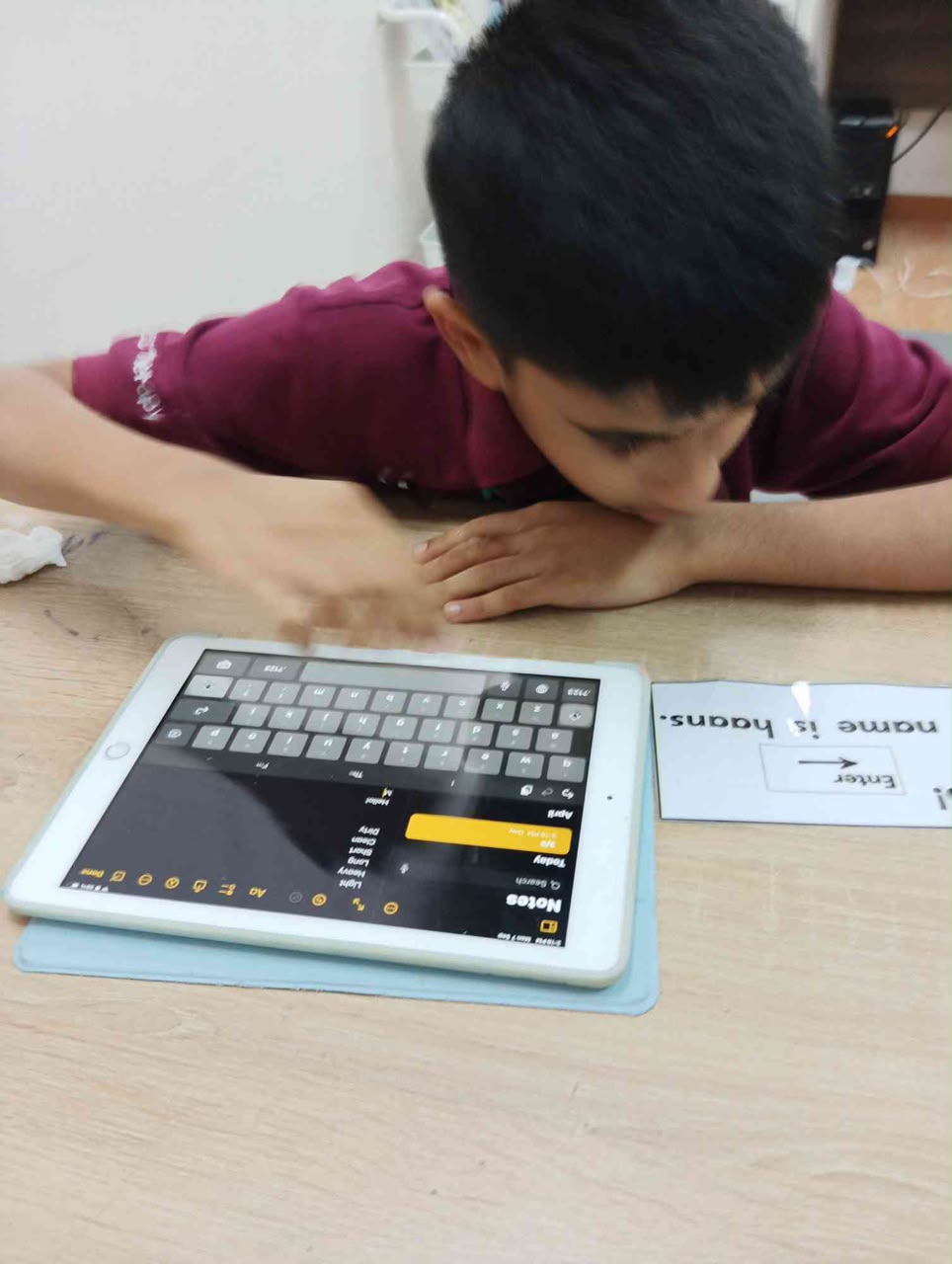

“I want biscuit.”
“I want iPad.”
“I want water.”
For many children who use Augmentative and Alternative Communication (AAC), these may be among the first messages they are taught to communicate.
And there is nothing wrong with that.
Being able to ask for what you need is important. For someone who cannot reliably communicate through speech, being able to say I want a drink or I need help can be life-changing.
But communication is so much more than asking for things.
We communicate to tell someone we love them. To complain. To disagree. To tell a joke. To ask a question. To say that something hurts. To tell someone to go away. To share what happened at school. To say we are frightened, bored, excited or angry.
We communicate because we have something to say.
Yet sometimes, when we introduce AAC to a child, we unintentionally reduce communication to a transaction:
“Tell me what you want.”
This AAC Awareness Month, perhaps we need to ask a different question:
Are we giving AAC users the words—and the opportunities—to tell us who they are?
AAC encompasses many ways of communicating, from gestures and signs to communication boards, pictures, writing and speech-generating devices. It can supplement speech or provide an alternative when speech is not reliable.
But whatever form AAC takes, its purpose should be bigger than getting needs met.
It should provide access to language, relationships, participation and autonomy.
Imagine if you could only ask for things
Imagine having plenty of thoughts but being given only the words:
want, eat, drink, toilet, more, finished.
You could probably get through parts of your day.
But could you tell your mother that something funny happened at school?
Could you say that you hate the song everyone else loves?
Could you ask why your teacher isn’t in school today?
Could you tell someone that you don’t want them touching you?
Could you say, That’s not what I meant?
Could you tease your brother?
Could you tell your friend a secret?
Could you say, I’m worried?
This is the difference between having a way to request and having access to communication.
Communication serves many functions. AAC users need opportunities to comment, protest, ask and answer questions, greet people, share information, direct others, joke and participate in conversation—not simply request preferred objects. AAC practitioners have long emphasised this broader range of communicative purposes.
Does the child have enough words to say what they actually think?
Adults naturally make decisions about the vocabulary available to young AAC users.
We decide which words appear on a communication board. We help select or programme vocabulary into a device. We decide which words to teach and model.
That gives us enormous responsibility.
If the vocabulary overwhelmingly consists of nouns—biscuit, ball, iPad, toilet, water—we may inadvertently provide a child with a menu rather than a language.
A robust AAC system needs to support much broader communication.
Consider words and phrases that allow a child to communicate ideas such as:
I don’t know.
That’s funny.
Different one.
I don’t like that.
Why?
Wait.
Stop.
I think…
I’m scared.
That’s mine.
You’re wrong.
Can I come?
Leave me alone.
I have something to tell you.
Vocabulary should support not only functional needs, but also social communication, language development and participation. ASHA specifically recommends considering vocabulary that gives students access to curriculum, social communication and ongoing language development.
Because a child’s vocabulary should not be limited to what adults think the child needs to say.
It should increasingly allow them to say what they want to say.
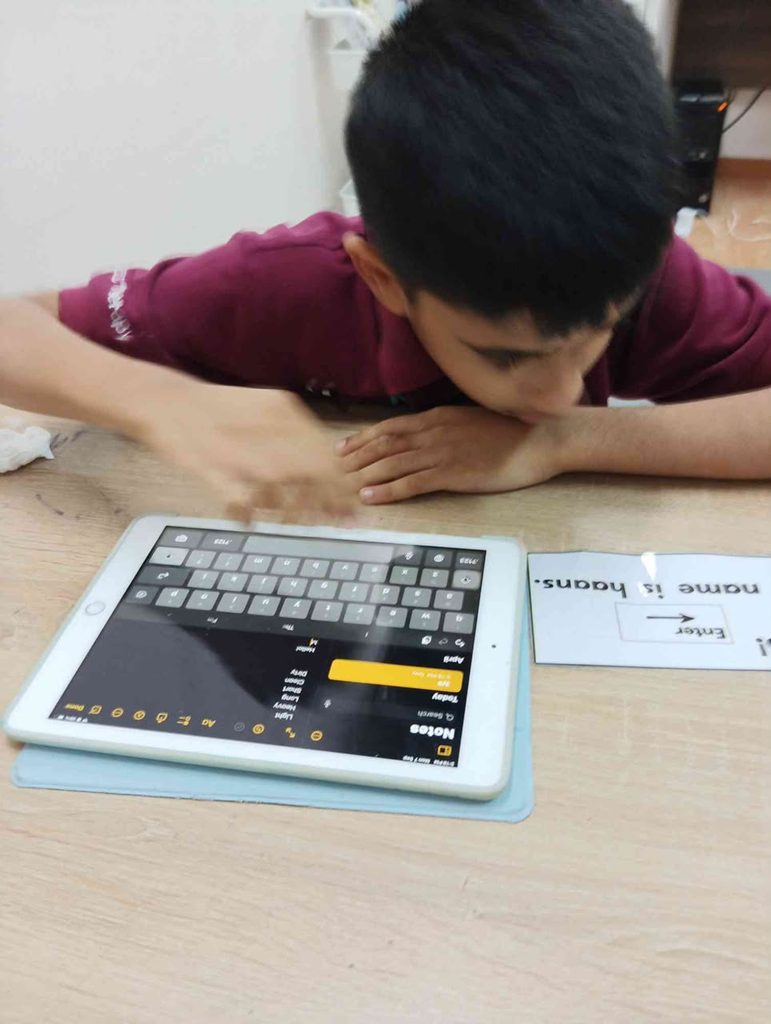
AAC users need the right to say “no”
One of the most important words we can give any child is:
No.
Yet sometimes we become much more enthusiastic about teaching children to request than teaching them to refuse.
We celebrate:
“I want bubbles.”
But what happens when the child says:
“No bubbles.”
Do we respect it?
AAC should not exist only for communication that adults find convenient.
A meaningful communication system needs to allow someone to reject, protest, disagree and express discomfort. Aided-language resources explicitly include protesting and rejecting among the communication functions that should be modelled and supported.
Of course, saying “no” doesn’t mean a child can refuse every necessary part of life. A child might say “no school” and still have to go to school, just as a speaking child might.
But there is a difference between hearing a person’s communication and always granting their request.
If a child communicates “no,” we can acknowledge it:
“I hear you. You don’t want to go.”
Then perhaps the conversation can continue.
Why?
What is difficult?
What would help?
That is communication.
We cannot expect children to use a language they rarely see others use
Imagine being handed a device containing hundreds or thousands of symbols and being told:
“Use this to talk.”
Then imagine that everyone around you continues communicating through speech while the device is only brought out when someone wants you to answer a question.
We would never teach a child spoken language that way.
Children hear language around them constantly before and while learning to speak. AAC users also benefit from seeing their communication system used meaningfully.
One approach is commonly called aided language input or aided language modelling. The communication partner speaks while also selecting relevant symbols or words on the AAC system, showing how the system can be used for real communication. Research has examined positive communication outcomes from interventions incorporating aided AAC input, while AAC guidance encourages communication partners themselves to model the system.
That does not mean adults need to reproduce every word they say on the device.
Nor does it mean turning every interaction into a therapy session.
It might simply mean pointing to FUN while saying:
“That was fun!”
Or modelling DON’T LIKE when something unpleasant happens.
Or WHERE + GO? when someone leaves the room.
Or WOW + BIG when you see something surprising.
The message we are sending is:
This is a language. And people can talk to each other with it.
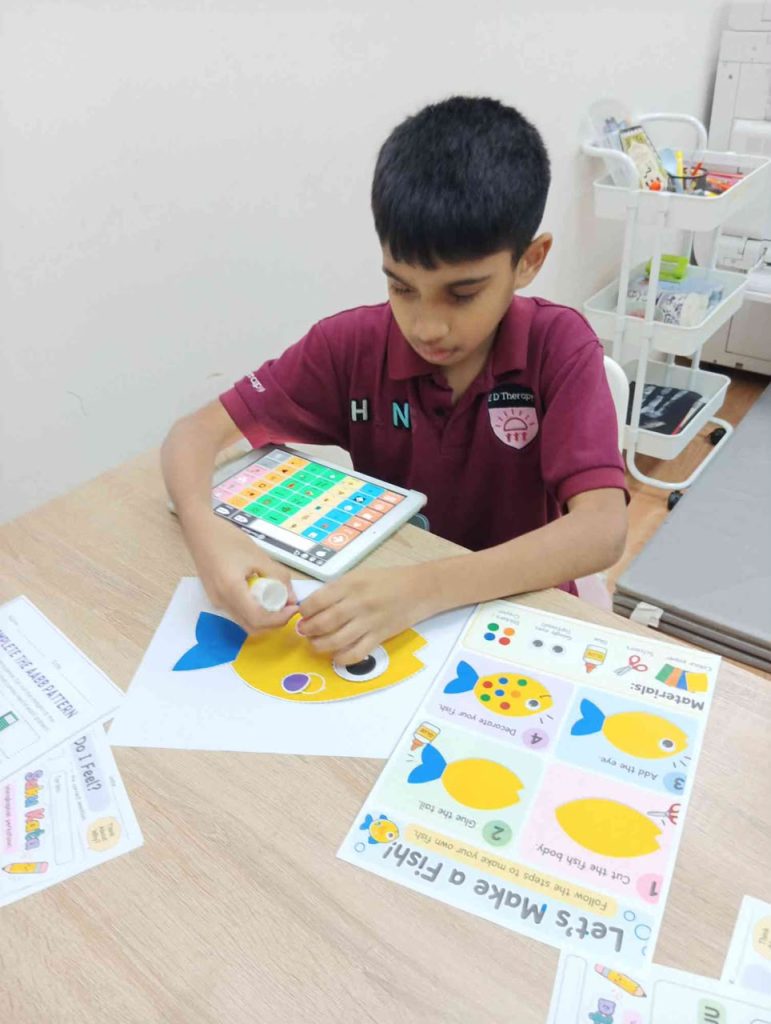
Model more than requests
What we model matters too.
If adults use AAC only to model:
Want?
More?
Eat?
then we should not be surprised if requesting becomes the child’s dominant use of AAC.
Instead, model the richness of ordinary conversation.
Comment:
That’s funny.Opinion:
I don’t like it.Question:
Where did it go?Protest:
Stop.Emotion:
I’m worried.Observation:
It’s raining.Social connection:
I missed you.Humour:
That’s silly!Surprise:
What?!Disagreement:
No, you’re wrong.
AAC educators recommend modelling language across different communicative functions and contexts rather than concentrating primarily on requesting.
Because our goal should not simply be to create good requesters.
It should be to support communicators.
What happens when the AAC device stays in the school bag?
There is another surprisingly simple barrier to communication:
The AAC system isn’t available.
Perhaps the tablet stays in the child’s bag during assembly.
The communication book is left on the classroom shelf during recess.
The device remains in the classroom when everyone goes to the canteen.
At home, it is placed on a table while the family goes outside.
Or it is taken away because it is considered “screen time.”
But if an AAC system is someone’s means of communication, it isn’t simply another electronic device.
ASHA’s guidance states that people who use AAC should always have access to their communication tools and specifically notes that ordinary concerns about children’s screen time do not apply when a screen is being used as part of an AAC system.
In August 2026, ASHA reinforced the same message for schools: a student’s AAC system should be available throughout the school day, with a low-tech backup considered in case an electronic device is unavailable.
Put another way:
Where the person goes, their communication needs to go too.
Communication doesn’t happen only at the therapy table
AAC can sometimes become associated with therapy.
The speech therapist takes out the device.
The child practises particular words.
The session ends.
The device goes away.
But real communication happens everywhere.
At breakfast.
In the car.
During maths.
At the playground.
At Grandma’s house.
At the mamak.
At the supermarket.
During a birthday party.
When siblings argue.
When something hurts.
When someone tells a joke.
When the child has something important to say at precisely the moment nobody planned a “communication activity.”
AAC therefore needs to travel across environments and communication partners. ASHA recommends considering the support a child needs to use AAC both throughout school settings—classrooms, hallways, lunchrooms, play and leisure—and outside school.
The aim isn’t for a child to become good at using AAC during speech therapy.
The aim is for AAC to help the person communicate in life.
Give them time
There is another thing AAC users need from us that cannot be programmed into a device:
Time.
Speaking can be remarkably fast.
AAC may take longer.
A person may need to navigate between pages, locate a symbol, spell a word, construct a sentence or physically access their device.
The temptation for communication partners is to help.
We guess.
“Do you want water?”
We finish the sentence.
We ask another question.
We repeat ourselves.
We move on.
Sometimes our desire to help actually takes away the person’s opportunity to communicate.
Waiting can feel uncomfortable.
Wait anyway.
Look at the person—not just their device.
Give them time to formulate the message.
And resist assuming you know what they are going to say.
Because perhaps you don’t.
That is, after all, the point of communication.

Don’t turn every interaction into a test
“What is this?”
“What colour is that?”
“Tell me what you want.”
“Say hello.”
“Show me happy.”
Sometimes adults can become so focused on teaching AAC that communication starts to resemble a continuous examination.
But speaking children are not required to prove their language skills every time they communicate.
Sometimes they simply say something because they want to say it.
AAC users deserve the same opportunity.
Instead of constantly prompting communication, we can create opportunities for it.
Make comments without demanding a response.
Model language.
Pause.
Notice what the person is interested in.
Respond to their communication attempts.
Allow conversations to go somewhere unexpected.
PrAACtical AAC describes active participation as including opportunities not just to respond but also to initiate, ask questions, refuse, explain, vent and even argue.
Successful communication is not necessarily:
The child used the word we were targeting.
Sometimes successful communication is:
The child said something we weren’t expecting.
Presume that there is more to say
Perhaps this is the biggest shift of all.
When someone has limited speech, adults can unconsciously begin limiting what we expect them to communicate.
We ask simpler questions.
Offer fewer choices.
Talk about them while they are present.
Interpret before waiting.
Assume that because someone cannot say something through speech, they do not understand it—or have an opinion about it.
AAC challenges us to separate speech from thought.
A person who does not speak reliably can still have preferences, memories, questions, humour, frustration, curiosity and opinions.
And AAC should give them increasing opportunities to express those things.
Not perfectly.
Not necessarily in full sentences.
Not necessarily using the communication method that adults expected.
Communication can be multimodal: speech, vocalisations, facial expressions, gestures, signs, pictures, writing and AAC devices may all form part of someone’s communication.
The goal isn’t to make every AAC user communicate in exactly the same way.
The goal is to make sure they have a way to be heard.
More than “I want”
Teaching someone to request something they need can be an important beginning.
But it should never be the end.
AAC should give someone access to words such as:
No.
Why?
I don’t know.
I don’t like that.
I’m scared.
That’s funny.
Wait.
Listen to me.
I have an idea.
And eventually, combinations of words that nobody else chose for them.
Because communication is not simply about getting a biscuit, choosing an activity or answering an adult’s question.
It is how we participate.
It is how we connect.
It is how we disagree.
It is how we advocate for ourselves.
It is how we show people who we are.
So perhaps the question we should be asking about an AAC user is not:
“Can they use their AAC to tell us what they want?”
But:
“Have we given them enough language, access, time and opportunity to tell us what they think?”
Because AAC should not simply give someone a way to ask for things.
It should give them a voice.




 English
 Malay