

By Desiree Kaur
Picture source: Pexels
This article was first published on Makchic.com here on 21 March 2022.
Disabilities. This is a very big word to use, even for adults. Today – when language, terms of references and respecting people of all abilities is more important than ever – it is never too early to talk to your kids about disabilities. According to the Oxford Dictionary, the word “disabilities” is a countable noun, which means a physical or mental condition wherein you’re unable to use a part of your body completely or easily, or where you cannot learn easily.
In Malaysia, the largest disabled population are those diagnosed with learning disabilities. Learning disabilities include autism, dyslexia and attention deficit hyperactivity disorder (ADHD), to name a few. Another term used for learning disabilities is neurodiversity. It is important to understand that each diagnosis is different, and each person is different regardless the diagnosis. These are also called hidden disabilities as it is not always immediately evident upon meeting someone.

Understanding Diversity and Inclusion
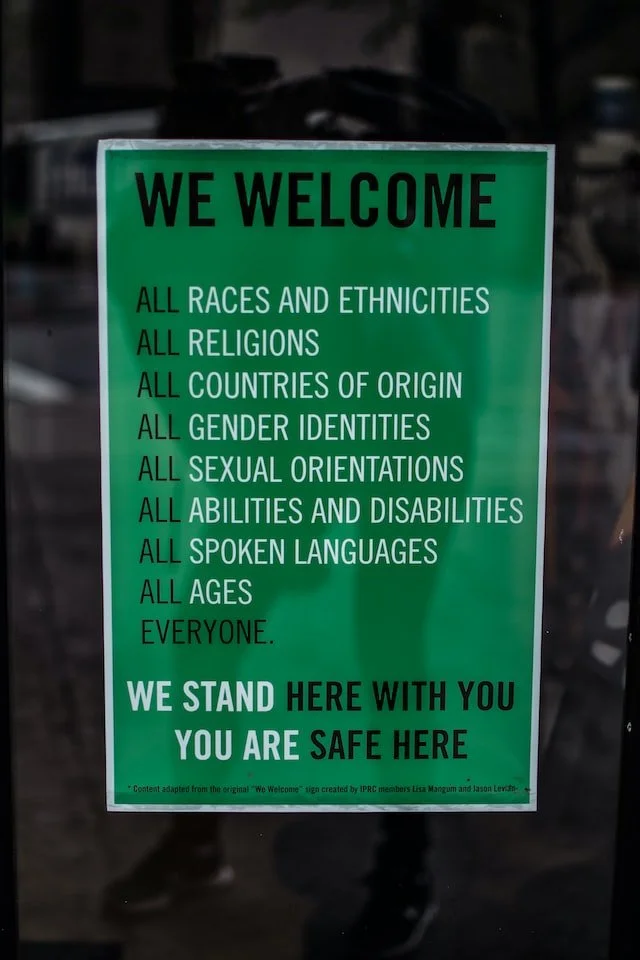
Picture source: Unsplash
Diversity is something Malaysia is used to. We are a hotpot of cultural diversity. So, neurodiversity and different abilities should not be a struggle for us. However, we have some way to go in terms of helping communities understand what inclusion is.
The word inclusion has a simple meaning – it means “to include”. Where education is concerned, inclusive education is much more than having a person with different abilities in a typical classroom. It means, making the necessary accommodation and having the teaching requirements for all abilities in a classroom. Likewise, our society is gearing very much towards a more inclusive society. We see public spaces having better wheelchair access and lifts with Braille buttons.
Where neurodiversity is concerned, some steps have been taken to make public spaces friendlier to sensory needs. For example, the availability of calm rooms and sensory walks at Sunway Putra Mall. Nevertheless, education and awareness begins at home. It cannot be left to schools, teachers, and friends to help our kids understand that not everyone is the same.
Here are some points to consider when you want to have that chat with your children about disabilities.
1. Check your knowledge first
No, you do not need to be an expert. However, find out some key points about disabilities before you start the conversation. Knowing what you don’t know is a good place to start.
There are many resources available these days to check your knowledge on disabilities. Sometimes, the best sources are closer to you than you realise. If you have a friend or family member with a disability, or who’s a caregiver, ask them. Chances are, they will really appreciate the question, and will share willingly and openly. Alternatively, here are some sites you could visit to learn about disabilities.
2. Use appropriate language & terminology
 Photo source : Unsplash
It’s much easier to offend someone these days compared to when we were kids. Encourage our children to tell us some of terms of references they have heard of when people refer to someone with disabilities. If you find some inappropriate, gently explain to them why they should refrain from using such terms. Then, provide them with alternative terms they could use. For example, blindness is commonly referred to as visual impairment, and deafness is referred to as hearing impaired. These terminologies exist now due to the different levels of visual and hearing impairments faced by individuals.
Similarly, terms like handicapped can easily be replaced with physical disability or challenges. Where hidden disabilities are concerned, there is much to consider too. With ADHD and dyslexia, it is quite common to say someone has ADHD or has dyslexia. Terms like “dyslexic” and “autistic” are also commonly used. However, there are certain people who also take offense to the challenge being referred to, rather than the person first – for example, saying someone has autism, rather than saying someone is autistic.
3. Ask preferences
With so much to consider in terms of offending people, a good place to start is, by explaining the various terms we know to our children. These are terms you already know or came across as you were “checking your knowledge” or finding out more about “language and terminology.”
Then, encourage them to ask about preferences, when in doubt. Asking preferences is something anyone would appreciate. It shows respect and reinforces the importance of us seeing everyone as individuals. Begin with teaching our kids the basic terms – such as visually impaired for blindness, hearing impaired for deafness, neurodiversity for hidden disabilities, and physical disabilities rather than handicapped. Encourage our children to be polite, and ask if they’ve gotten the terminology and reference right.
In instances where verbal communication is a challenge, it is alright to ask the caregiver or companion, or to refer to any assistive communicative devices they may be using.
4. Avoid generalising and stereotyping
It is quite common for people to respond to a person’s disabilities by associating it with something else they know. For example, sometimes when I tell people my son has autism, they are quick to tell me about someone they know who has some other disability like Down’s Syndrome, or dyslexia.
Another common association is with famous people or television characters such as Rain Man, the Good Doctor or Cody Lee, the winner of America’s Got Talent. It is important to understand that just like how everyone is different, people with disabilities are individuals too, and may not experience the world in the same way another person with the same diagnosis does.
Additionally, having a hidden disability does not necessarily mean they are cognitively impaired. So, it is always polite to speak to someone at their age, and not the age we assume they are mentally capable of. For example, if an adult with autism appears to be less communicative, or is assumed to have the cognitive abilities of a child, it would be inappropriate to treat them like a child. Everyone deserves to be treated with dignity.
5. Use books or illustrations to explain
For our kids who are visual learners, you could consider using books or visuals aids to help explain disabilities. These days, there are many kinds of children’s books that help parents explain key issues or topics to children. For example, makchic’s What if?, helps to explain to children about “safe touches.”
These days, there are children’s books on diversity and inclusion. Muhsin Kids, a children’s bookstore, has a whole section of children’s books on diversity and inclusion. YouTube is also an excellent resource for the reading of children’s books.
Here are a few videos that could help you get started:
6. Be open, honest and age-appropriate
Children appreciate being treated with respect, and this means being honest and open in our communication with them. If there are areas about disabilities you are not sure about, tell them just that and then, invite them to learn alongside you. It would make an excellent bonding activity, too.
Also, ensuring that what you share is age-appropriate as well is important. For younger children, perhaps using big words like “neurodiversity” may be a mouthful, so stick to a simpler word like “different”. Explain that the way their friend understands things is not the same as them. At the end of the day, you know your child best, so use the appropriate language for them to grasp what you are trying to tell them.
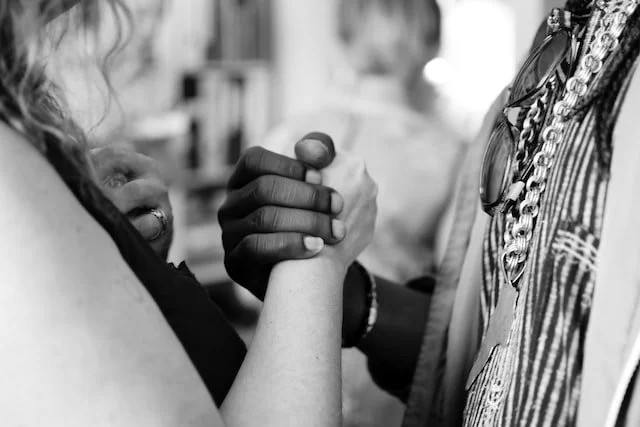
Photo source: Unsplash
Talking about disabilities is not easy. Also bear in mind that children with disabilities are navigating life in a world which sometimes feels very strange to them. Some may not fully understand the extent of their disabilities and challenges too. Caregivers and family members are probably still learning how to navigate the world as best they can. Where neurodiversity is concerned, masking often happens too – which is where a neurodiverse person has learned to mimic social norms to blend into society. Masking can be very uncomfortable and often take a toll on their overall wellbeing. Hence, an autistic person could appear to be neurotypical, to blend in quite effortlessly.
While the conversation about disabilities and neurodiversity can be difficult, it is an important one. It starts by being open, honest, and accepting – accepting that there is no one right way to understand something, and accepting that people are people, regardless of their race, religion, sexual orientation and abilities. Accept first, and then openness and honesty will lead to the realisation of a truly inclusive society for our children to navigate without fear.



 Malay
Malay  English