



By Desiree Kaur

Image source: Unsplash
Reading is a sacred activity to me. When I read, I always hear a voice narrating the content to me. This helps me stay focused, play out the characters, conversations or tips, and imagine the written words as if I am watching a movie in my head. Reading Kate C Wilde’s, Autism Abracadabra, I could hear Kate’s voice, inflections; imagine her expressions and drink in the wealth of experience as I read this book from cover-to-cover in just a day.
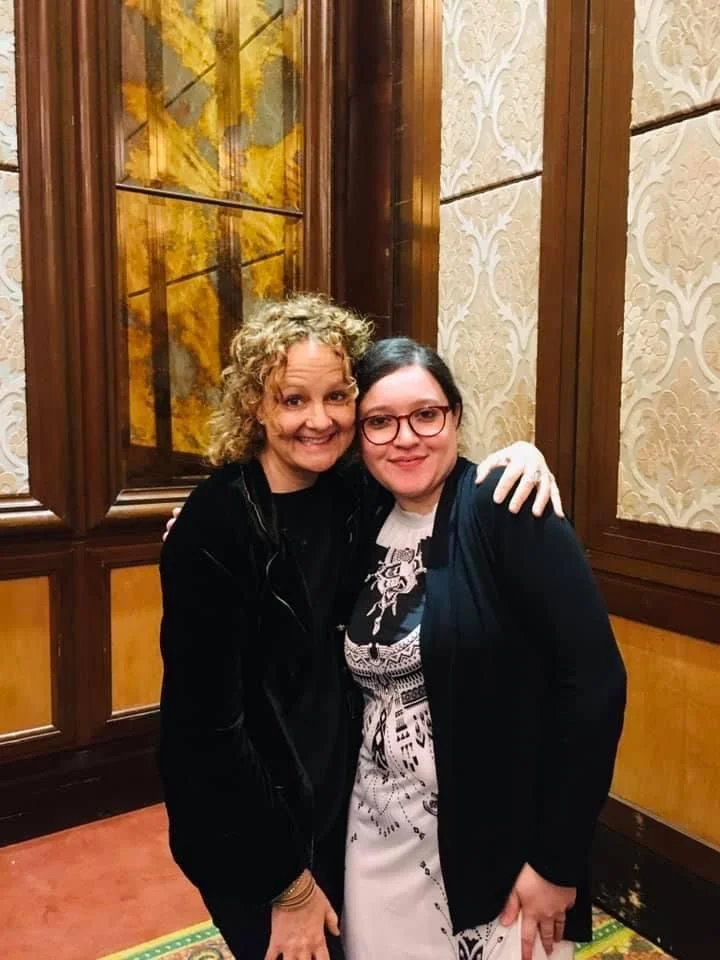
Kate C Wilde (left) with Desiree Kaur at the SonRise Start-Up Program in Malaysia -November 2019.
I’ve had the privilege of attending an in-person course and online Webinars / courses conducted by Kate. Suffice to say, I am quite a fan, because not only does she make for an interesting trainer to help caregivers and loved one of those with autism learn ways to connect, she is an exceptionally gifted writer who creates content that is relatable, practical and with “oh so many options” covering the wide range of the autism spectrum.
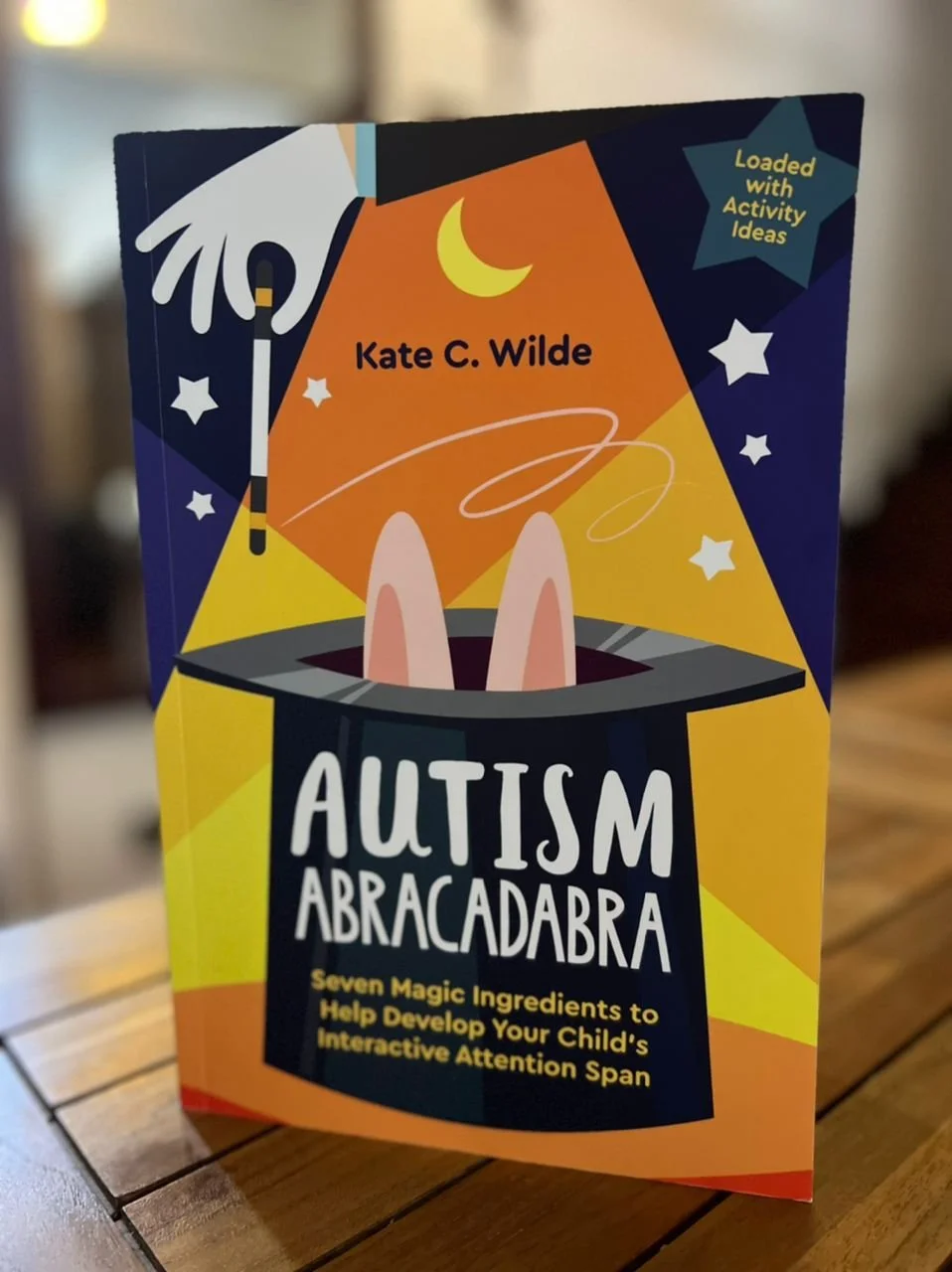
The full title of this book definitely does it justice – Autism Abracadabra. Seven Magic Ingredients to Help Develop Your Child’s Interactive Attention Span. Hence, the term grimoire used in the title of this piece. According to the Oxford Dictionary, a grimoire is “a book of magic spells and invocations.” While there are no invocations in Kate’s book, the abundance of games in different variations, to me, is equivalent to magical spells that are specially designed to help us interact better with our loved ones on the spectrum.
So, let me tell you about the book…
It is divided into 2 parts. Part 1 spells out what exactly the seven magic ingredients are. This part of the book is called “The How To.” Simply put, it outlines for readers how to use this book’s content. It explains very clearly what the seven magic ingredients are, with real life examples from Kate’s working with some 1,500 autistic individuals ranging from 18 months to 56 years old. For those of you who are “eager beavers” and love skipping to Part 2 or right to the end, I do not recommend this. This book is meant to be read in the order that it has been organised in. Part 1 is structured to provide key mindset shifts to help us rewire our beliefs in order to successfully implement and modify the game ideas to suit our loves ones’ preferences. It also provides the necessary context on how to implement the suggested game ideas. Missing our on Part 1, could result in not fully appreciating and utilising all the essential tools provided in Part 2.
In case you’re wondering, “Is this book suitable for those with teenagers and adults on the spectrum since it has suggestions for games?” This answer is a resounding yes. Absolutely. Here’s what Kate has to say about age:
“ Let’s not get caught in a limiting paradigm about what is age appropriate and what is not.”
Kate C. Wilde – Autism Abracadabra, pg 68
Kate explained how many enjoy silliness, fun and games way into adulthood. Therefore, let’s not be so limited by the terminology of “game” and be quick to say, it isn’t for us before even trying.
 And now the Games and Activities …




 English
  Malay
Malay