



A child suddenly refuses to go to school.
Another child who usually enjoys spending time with the family begins retreating to their room.
A child who has always had big emotions seems increasingly distressed. Sleep becomes difficult. Meltdowns become more frequent. Activities they once enjoyed no longer seem interesting.
For parents of neurodivergent children, changes like these can raise a difficult question:
Is this part of my child’s neurodivergence, or is something else going on?
There isn’t always a straightforward answer.
Autism, ADHD and dyslexia are neurodevelopmental differences. They are not mental-health conditions. However, being neurodivergent does not protect a child from experiencing anxiety, depression or other mental-health difficulties. In fact, mental-health conditions can occur alongside neurodevelopmental conditions; clinical guidance for both autism and ADHD specifically emphasises assessing for co-occurring emotional and behavioural conditions. American Academy of Pediatrics
This Mental Health Awareness Month, perhaps we need to look more closely at what our children’s behaviour may be trying to tell us.

When “that’s just how they are” isn’t enough
Parents often become experts in their own children.
We know which foods they will eat, which sounds they cannot tolerate, what happens when plans suddenly change and when they simply need some space.
That familiarity is valuable.
But it can also mean that a significant change is sometimes attributed to a child’s existing diagnosis.
A child is withdrawing? That’s the autism.
They cannot concentrate? That’s the ADHD.
They refuse school? They’ve always struggled with transitions.
They’re having more meltdowns? They’re just dysregulated.
Sometimes those explanations may be relevant. But they should not automatically end the conversation.
The American Academy of Pediatrics recommends looking at children’s mental and emotional wellbeing in terms of their individual functioning and circumstances. For neurodevelopmentally different children, what is typical or concerning needs to be considered relative to that particular child—not simply compared with other children.
One useful question for parents, therefore, is:
“Is something different about my child compared with their usual self?”
Look for change, not just behaviour
Rather than focusing on one particular behaviour, consider changes over time.
Perhaps your child has always preferred playing alone. That alone does not necessarily indicate a mental-health problem.
But what if a child who previously enjoyed particular people or activities suddenly withdraws from them?
A child may always have experienced difficulties sleeping. But has their sleep become significantly worse?
School may always have been demanding. But have Sunday evenings suddenly become filled with distress about Monday morning?
Other changes might include appetite, energy, emotional regulation, irritability, participation in favourite activities or increased physical complaints.
In autistic children specifically, clinical guidance notes that changes in affect, participation, sleeping and eating can sometimes be associated with an underlying mood disorder.
No single change automatically means that a child has a mental-health condition. What matters is noticing patterns, persistence and the extent to which something is affecting the child’s everyday life.

Behaviour is communication
This becomes particularly important when a child cannot easily tell us what they are experiencing.
A child may not say:
“I’m anxious about school.”
“I’m overwhelmed.”
“Someone is bullying me.”
“I don’t understand what is expected of me.”
“I’m exhausted from trying to hold everything together.”
Some children may not have the spoken language to communicate these thoughts. Others may struggle to identify or explain what they are feeling.
Their distress may instead appear as behaviour.
It could look like aggression, withdrawal, crying, refusal, increased repetitive behaviour, changes in eating or sleeping, increased meltdowns, or simply a child who seems different from usual.
For children with significant communication difficulties, changes in behaviour, socialisation and demeanour may sometimes be among the ways anxiety or depression becomes visible. At the same time, a sudden behavioural change can also have physical causes—including pain or illness—so it is important not to assume that every change is psychological.
Instead of immediately asking, “How do we stop this behaviour?”, perhaps our first question should be:
“What might my child be communicating?”
When school becomes too much
School is another place where changes may first become visible.
A child may begin complaining of stomach aches before school, refusing to get dressed, crying at drop-off, repeatedly asking to stay home or experiencing significant distress on Sunday evenings.
For some neurodivergent children, school itself can place substantial demands on communication, sensory processing, executive functioning, academic skills and social interaction.
But school avoidance should not automatically be dismissed as a feature of neurodivergence.
Anxiety, bullying, academic difficulties, social isolation, changes in teachers or schools and other stressors can all contribute to changes in a child’s functioning. A sudden academic decline or new behavioural difficulty warrants looking at the wider picture rather than assuming the child’s diagnosis explains everything.
Parents and teachers therefore need to communicate.
Is the child behaving differently at school?
Have friendships changed?
Has academic work become substantially harder?
Is there a particular lesson, teacher, environment or part of the school day that seems to trigger distress?
Sometimes the pattern tells us something the child cannot yet explain.
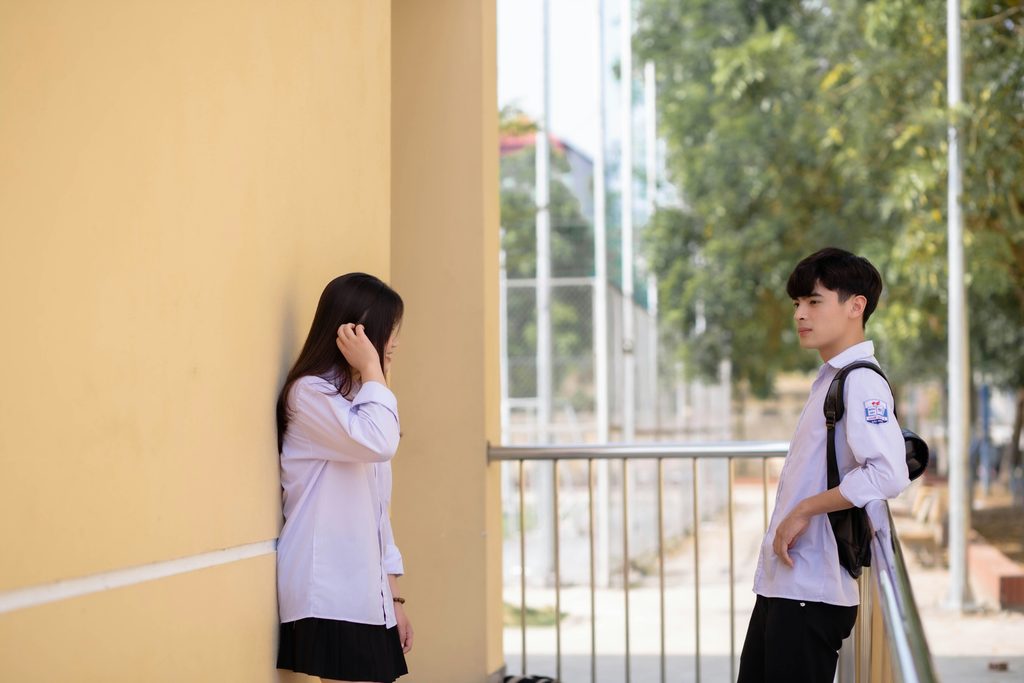
The child who seems “fine” at school
There is another possibility that deserves attention.
Some neurodivergent children work extremely hard to manage themselves in environments that are difficult for them.
They may suppress behaviours, copy peers, force themselves through uncomfortable situations or expend considerable energy meeting expectations during the school day. This is often discussed in relation to masking.
Then they come home and fall apart.
Parents can sometimes hear:
“We don’t see that behaviour at school.”
That does not necessarily mean that what happens at home is insignificant.
Different environments place different demands on children, and different environments may also be where children feel safe enough to release accumulated distress.
Rather than debating which version of the child is the “real” one, it can be more useful for the adults around them to share observations and ask what might explain the difference.
What about burnout?
The word burnout is increasingly used within neurodivergent communities, particularly in discussions about autism.
A child who has spent long periods trying to cope with demands that exceed their capacity may appear exhausted, withdraw more, struggle with tasks they previously managed or become increasingly overwhelmed.
However, parents should be cautious about diagnosing burnout themselves.
Fatigue, withdrawal, changes in functioning and loss of interest can have many possible explanations—including physical illness, sleep difficulties, anxiety and depression.
The label matters less than recognising:
Something has changed, and my child may need help.

Don’t wait for your child to say, “I need help”
Adults sometimes expect children to tell us when something is wrong.
Not every child can.
For a neurodivergent child, recognising an emotion, understanding its significance, finding the language to describe it and then communicating it to another person may itself be difficult.
That is why observation matters.
If changes are persistent, causing significant distress or interfering with school, relationships, sleep, eating, daily activities or things the child previously enjoyed, consider speaking to an appropriately qualified healthcare or mental-health professional.
Assessment should look at the whole child.
Could there be a physical problem?
Has something changed at home or school?
Is the child being bullied?
Are academic expectations appropriate?
Are communication or sensory needs being met?
Could anxiety, depression or another mental-health difficulty be contributing?
Good assessment is not simply about attaching another diagnosis. It is about understanding why this particular child is struggling at this particular time. Current paediatric guidance similarly encourages clinicians to consider a child’s development, environment and functioning rather than viewing an emotional or behavioural concern in isolation.
Start with curiosity
Perhaps one of the most helpful things adults can do is replace judgement with curiosity.
Instead of:
“Why are you behaving like this?”
Try:
“Something seems harder for you lately. How can I help?”
Instead of:
“You went to school yesterday. You can go today.”
Ask:
“What feels difficult about school right now?”
And if spoken language is not your child’s preferred or most effective way of communicating, give them other ways to answer—through Augmentative and Alternative Communication or AAC, writing, drawing, visual choices, gestures or whatever communication method works for them.
Most importantly, don’t assume every difficulty is simply part of being neurodivergent.
A diagnosis can help us understand our children, but it should never prevent us from noticing when something has changed.
Sometimes behaviour is behaviour.
Sometimes it is communication.
And sometimes it is a child telling us, in the only way they currently can:
“I’m struggling.”
Our job is to notice—and to keep asking what they need.



 English
  Malay
Malay